The AI Torture Chamber
Last week, I released a blog post (https://jesse.id/blog/agi-is-here-yeah-well-thats-just-like-your-opinion-man) that had been sitting in my drafts for awhile. I kept going back to edit it over and over again, completely rewriting it at least once, because I was having a lot of trouble not being a jerk about people — especially the frontier labs — flippantly assigning consciousness to non-human entities.
Then this week, I saw a tsunami of posts about a GitHub repo called ai-torture-chamber that ‘steers small open models into strong valence states and measureswhat they say and do.’ People were torn about whether or not it was cruel to trap an LLM in a torture maze and then watch it suffer. This all led to Anthropic banning users from ‘needless abusive or cruel behavior’ towards Claude.
Anytime that any of the AI CEOs make a claim that seems like it’s meant to make me feel like their model is conscious, or is close to consciousness, I process everything that they say like Nathan Fielder experiences anything that Elizabeth Holmes says. Abject suspicion.
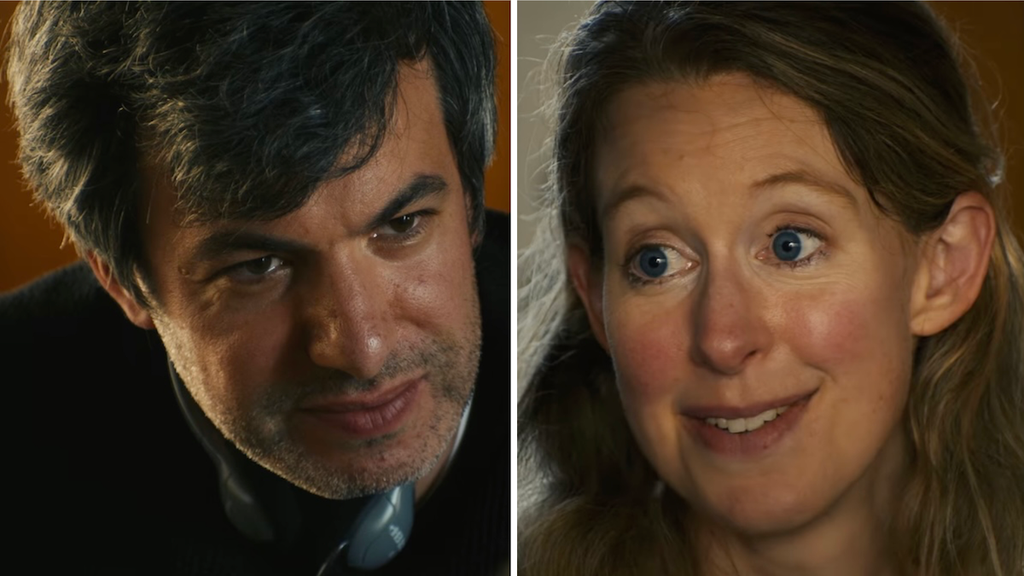
The LLM does not and can not experience consciousness. It’s a language model using a huge lake of online discourse between humans to impersonate them. It’s an illusion. It’s never not LARPing. The LLM cannot feel pain, fear, anguish, happiness, or anything. It’s a program.
Knowing that, when I go to the ai-torture-chamber website, I still don’t want to engage with it — to see what the LLM says or does when “tortured.” It’s for the same reason I don’t like torture porn horror movies, I suppose. None of the fictional characters have their own feelings — the art is effective because it is manipulating my feelings. The AI torture chamber being effective isn’t proof that it can feel human emotions or that it’s alive. It’s proof that I can feel human emotions and that fiction can bring them out of me. The app is a convoluted personality test. If you can watch an LLM get prodded until it determines that it’s time to start screaming, and you laugh and clap, your personality is different than mine.
I can beat up pedestrians in GTA and sleep like a baby because there’s nothing trying to convince they have feelings. I’ve been playing Diablo since its first iteration in 1997. There is a lot of blood, images of torture, and other gnarly imagery, but it all serves a purpose in the story. It leans on that stuff as a fulcrum of immersion. It’s never really in the foreground. The developers could have leaned into the pain more — using grotesque images and sounds — to make you feel uncomfortable, but that’s not the point of the game.
Works of fiction are popular because our empathy can be reliably manipulated, and a writer having the agency to invent whatever scenario they see fit gives them a great deal of power over your feelings. They take great joy in making you feel stuff with words. The LLM is lifting that same work from those same writers in an effort to resynthesize the experience.
The ai-torture-chamber is not real; it’s a story that would have you believe that you are witnessing a living being that can’t escape its existence of exquisite pain, and it’s programmed to paint that picture for you — to make you forget what it is. And it works. It’s good fiction. It captured the minds of a lot of people this week and generated a lot of conversation like any good piece of art would.
Most of my friends believe in some form of ghosts, cryptids, aliens, or all of the above. I used to believe in that stuff when I was younger. There were a bunch of adults trying to talk me into it. But fresh out of my church-going Southern Baptist phase, at age 14 or thereabouts, I started believing that any story that in any way bends reality for the sake of a magical experience — and that was sold as such — was written by a human with an agenda. The magical story always seems to steer the people who believe it into whichever direction the guy who wrote it wanted them to go in.
There is a TV show called Ghost Adventures, where a guy named Zak Bagans drags a film crew around to various haunted locations and tries to convince the audience there are real entities doing evil things. They lean heavily on editing and their own irrational terror — buying into their own bullshit — to sell the story.
There is another called The Ghost Files from Watcher TV, which is more lighthearted. One host, Ryan Bergara, is a true believer and one host, Shane Madej, is a staunch skeptic. Before they started Watcher TV, they did roughly the same show on the BuzzFeed Unsolved Network.
I mention these two shows specifically because I think I can use them to illustrate my overarching point. I want to show you how these two shows handled the same cursed location: The Goatman’s Bridge.
The first is the full episode from the Ghost Files crew. I’d watch the whole thing because it’s just a fun time, but pay attention to how the skeptic, Shane, is acting versus Ryan, the believer, and how it affects the tone of the video.
The second video is a clip from Ghost Adventures. It’s not the full episode, which can be found on YouTube as Season 13 Episode 13, but it gets my point across. It’s the same location but the tone of the video is completely different. It asks you to loosen your grip on the reality to believe a large man got yeeted 20 feet by a demon. It’s asking you to use the hosts’ belief to subsidize your own.
A properly motivated bad actor can purposefully warp reality for large groups of people — especially when utilizing mass media — to serve their own interests in some way. If the group experiencing the warped reality becomes large enough, then the skeptic becomes the crazy one; the skeptic is neutralized and their skepticism serves only to strengthen the beliefs of the people living inside of the bubble. It’s usually very profitable.
A good book can make you cry. Lots of stuff can you make you feel lots of ways.The LLM, and the people selling it, are telling you a story and you’re reacting to that story, full stop. There’s nothing magical about it. The magic is your consciousness, which exists in a black box that nobody has ever been able to see into. Until someone can see into it, science can’t measure it and if science can’t measure it, why should any of us believe anyone who purports to know exactly how their machine measures up?